






 Beach Tours
The Sea Capital of Bulgaria
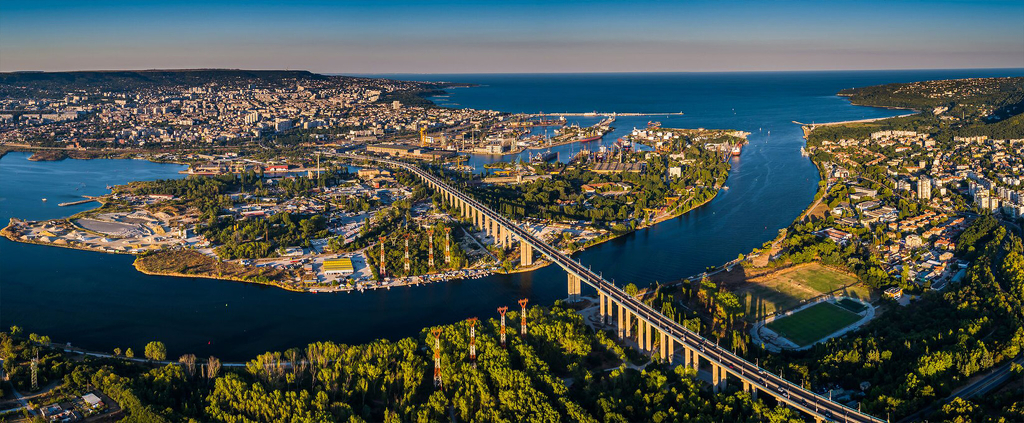
Varna is the third largest city in Bulgaria, situated strategically in the Gulf of Varna. The city has been a major economic, social and cultural centre for almost three millennia. Its geographical location, rich natural resources and ancient history determine its image of one of the most famous and beautiful resort centres in Europe and the largest in the Black Sea region. As the eastern gate of the European Union, the city is an important transport and logistics centre, linking Europe and Asia.
History
The oldest gold treasure in the world was discovered in Varna Necropolis dated to 4600–4200 BC. Historically known as Odessos, Varna was developed from a Thracian seaside settlement into a major seaport on the Black Sea. Through the centuries it has been part of the kingdoms of Thracians, Greeks, Celts and Byzantines. Control changed from Byzantine to Bulgarian hands several times during the Middle Ages. During the XIV century Italian port charts showed Varna as arguably the most important seaport between Constantinople and the Danube delta.
On 10 November 1444, one of the last major battles of the Crusades in European history was fought outside the city walls. An army of 20,000–30,000 crusaders led by Ladislaus III of Poland was assembled at the port city to set sail to Constantinople. The Christian soldiers were attacked by a superior force of 55,000 or 60,000 Ottomans led by Sultan Murad II. The failure of the Crusade of Varna made the fall of Constantinople to the Ottomans in 1453 all, but inevitable.
Varna established itself as the nation's principal port of export, a major grain-producing and viticulture center, seat of the nation's oldest institution of higher learning outside Sofia, a popular venue for international festivals and events, and the country's de facto Summer Capital with the erection of the Euxinograd Royal Summer Palace. Mass tourism emerged from the late 1950s. Varna is also one of the stations of the popular Orient Express train from Paris through Europe to Istanbul.
Tourism, events and climate
Varna has some of the finest and oldest museums and art festivals in Bulgaria and is known for its century-old traditions in visual arts, music and book publishing, as well as for its bustling hip-hop and pop-culture scene. Over the past few decades, it has developed as a festival centre of international standing by hosting events such as the International Music Festival "Varna Summer", the International Ballet Competition, the International Theatre Festival, the International Film Festival "Love is Folly" and others.
The urban area of Varna has over 20 km of sand beaches and a number of thermal mineral water sources (temperature 35–55 °C or 95–131 °F). It enjoys a mild climate influenced by the sea with long autumns and sunny and hot, yet considerably cooler than the Mediterranean summers moderated by breezes and regular rainfall.
Tourism is of foremost importance with the suburban beachfront resorts of Golden Sands, Riviera Holiday Club, Sunny Day and Saint Constantine and Helena. These beach destinations offer more than 60,000 beds some of which annually win the Blue Flag Award for Best Beach.
City Landmarks
Some of Varna's major tourist sites include the Varna Archaeological Museum, exhibiting the Gold of Varna, the Roman Baths, the Battle of Varna Park Museum, the Naval Museum in Villa Assareto displaying the Drazki torpedo boat and many others. On an area of 4000 m² the Retro and Wax Museum is where you can find more than 50 restored cars, manufactured between 1943 and 1989. There are 27 wax figures of ideologists, revolutionaries and national artists such as Todor Zhivkov, Stalin, Lenin, Leonid Brezhnev, Fidel Castro, Che Guevara, Erich Honecker, Nicolae Ceausescu, Gustav Husak, Wojciech Jaruzelski, Vysotsky and others to take pictures with.
The 'Sea Garden' is the oldest and perhaps largest park in town containing an open-air theatre (venue of the International Ballet Competition, opera performances and concerts), the Varna Aquarium (opened 1932), the Festa Dolphinarium (opened 1984), the Nicolaus Copernicus Observatory and Planetarium, the Museum of Natural History, a terrarium, a zoo, an alpineum, a children's amusement park with a pond and a boathouse, ice-skating ring in winter and other attractions. The National Revival Alley is decorated with bronze monuments in the name of prominent Bulgarian citizens. Here is also the Astronauts' Alley with trees planted by Yuri Gagarin and other Soviet and Bulgarian astronauts. The Garden is a national monument of landscape architecture and is said to be the largest landscaped park on the Balkans.
The waterfront promenade is lined by a string of beach clubs, offering a vibrant scene of rock, hip-hop, pop and techno music, which enjoy a nationwide reputation, especially related to events such as July Morning and international rock and hip-hop (including graffiti) festivals. Traditional food and drinks can be tasted in the abundance of restaurants and taverns.
Sightseeing around Varna
The 52 m high Asparuhov bridge is a popular spot for bungee jumping. Outside the city are the Euxinograd Palace, park and winery, the University of Sofia Botanical Garden (Ecopark Varna), the Pobiti Kamani rock phenomenon and the medieval cave monastery Aladzha. Balchik Palace and the Botanical gardens are just 50 km to the north of Varna and at about 100 km northeast, near the town of Shumen, are the remains of the old capitals of the First Bulgarian Kingdom - Pliska and Preslav dating to the 7th and 8th century AD, as well as the UNESCO site Madara Horseman, dating back to the late 7th Century AD. Tourists can easily arrange one or two-day trips from Varna and enrich their experience of Bulgaria.
Varna is an attractive four season destination – its airport operates flights to 110 destinations provided by more than 60 airlines. The unique natural resources – 32 km of coastline with golden sand beaches, lush forests, more than 20 mineral springs, combined with rich cultural and historical heritage and traditions, provide great opportunities for recreation and entertainment, for cultural tourism and beach holidays as well as for balneological and SPA vacations.


